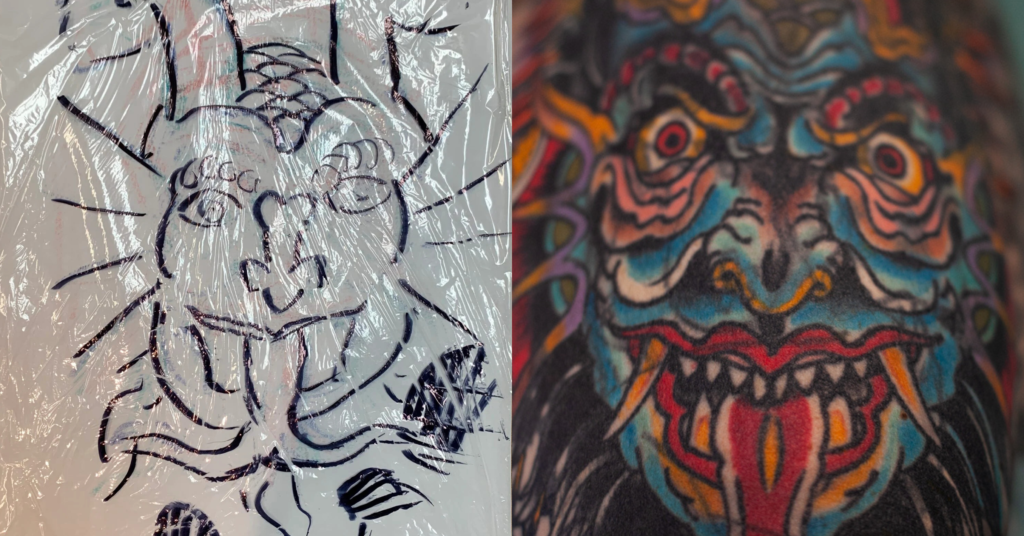
Cover-Up Tattoos: Transforming Old Ink into New Art in St. Louis
I need this tattoo covered up!
A bad tattoo doesn’t have to follow you for life. What felt right in one chapter can feel like a mistake in the next—and if you’ve been carrying around something that no longer fits, you’re not alone. Cover-up tattoos give people a way out, not by erasing the past, but by turning it into something they’re proud to wear. It’s more than damage control—it’s transformation. And if you’re in St. Louis, there are experienced artists who’ve made this kind of work their specialty. At Ragtime, we don’t just “fix” tattoos. We rework them with care, precision, and a strong design approach that makes the new tattoo feel intentional—not like a Band-Aid.
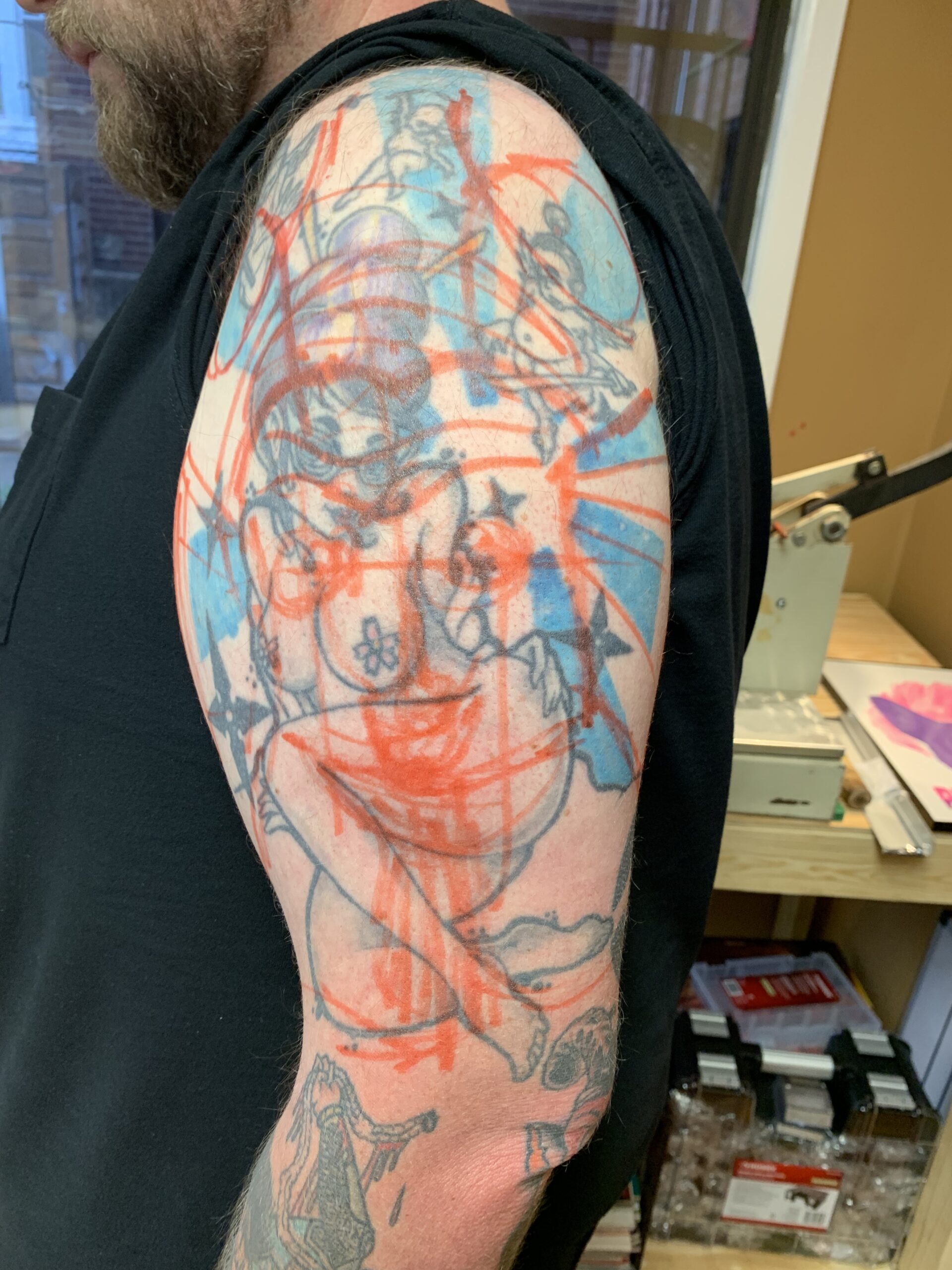
Drawing an new idea onto the client for a coverup.
Let’s dig into what makes a good cover-up, what’s possible, and why the right artist makes all the difference.
What Is a Cover-Up Tattoo?
A cover-up tattoo is exactly what it sounds like: a new design that’s built to hide, distract from, or incorporate an old one. It's not the same thing as removal—though in some cases, the two might be used together. Laser sessions can help lighten a tattoo just enough to open up more options for design or placement. But even with laser, the heavy lifting still comes down to the artist.
Cover-ups are different from fresh tattoos. They take more thought, more problem-solving, and often more time. The artist has to design around existing shapes, work with the old ink instead of against it, and build something new that draws the eye away from what used to be there. Not every tattooer is comfortable doing that—and honestly, not every tattooer should. It’s a specific skill set, and if someone’s only ever worked on blank skin, they might not know how to navigate the challenges a cover-up throws at you.
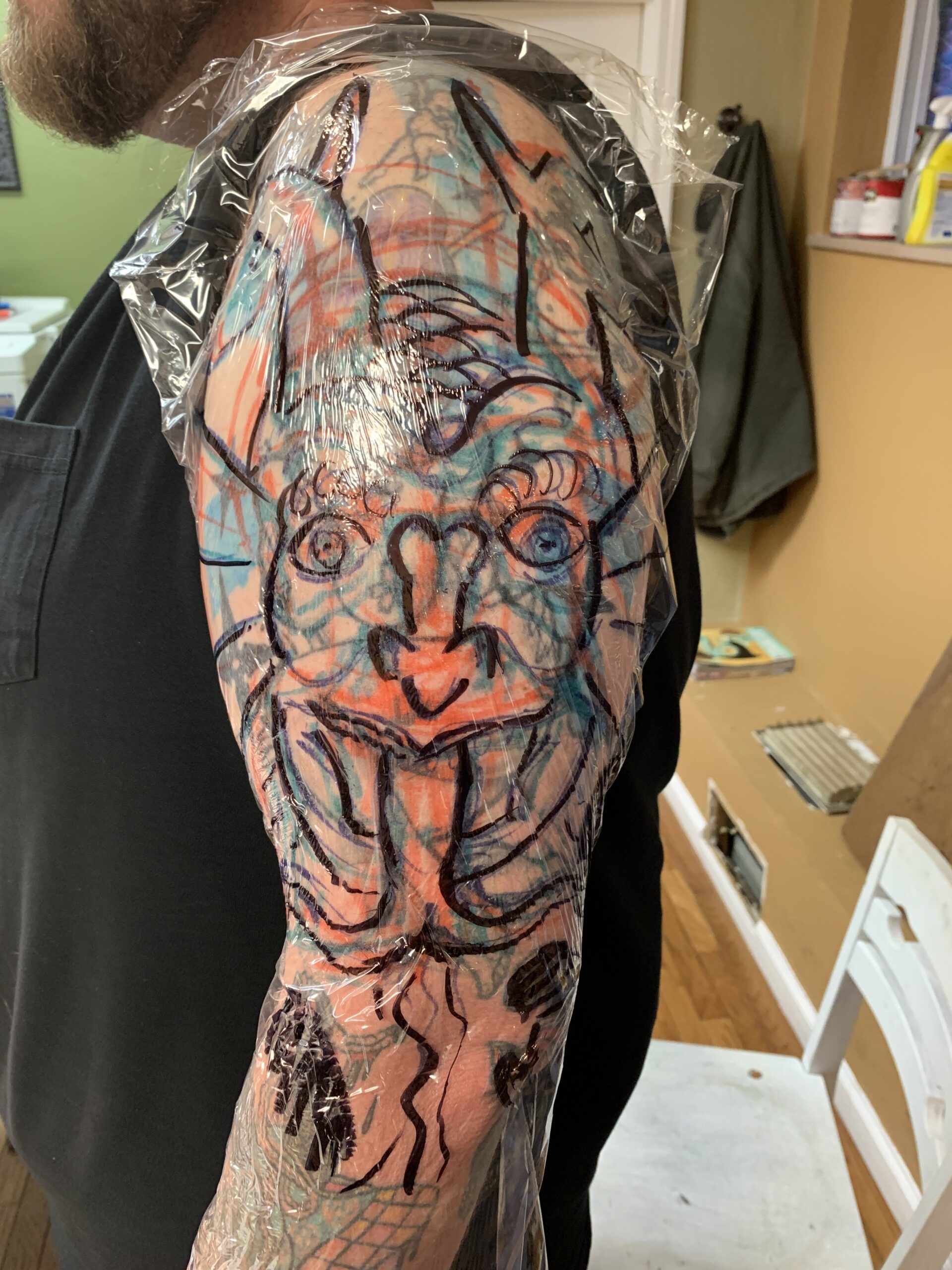
The artist maps out the cover-up drawing with a tracing.
Can Your Tattoo Be Covered?
Not every tattoo can be covered easily, but most of them can be reworked or at least partially disguised with the right approach. The big variables come down to size, saturation, placement, and your own flexibility with the new design.
Smaller, lighter tattoos—especially ones that have faded over time—are often the easiest to cover. If the lines are thin, the shading’s light, and the tattoo isn’t too close to bony areas or heavy scarring, there’s usually a lot to work with. Linework pieces that didn’t age well or tattoos that were never that bold to begin with can usually be absorbed into something else without a total overhaul.
What’s harder? Bold tribal pieces, solid blackouts, highly saturated color tattoos, or anything with thick lines that were dug too deep. If a tattoo’s been there for decades and the skin has scarred or raised over time, that limits what can sit on top of it. Tattoos like that might require some laser lightening first just to make space for a better option. Big cover-ups also need to be bigger than the original—there’s just no way around that. You’ll need to be open to the idea that the new piece might be larger, darker, and a little more layered than a fresh tattoo would be.
Also, it's important to accept that in some cases, a perfect “disappearance” isn’t possible. Some old tattoos might ghost through slightly, especially in certain lighting or on thinner skin. That doesn’t mean the cover-up failed—it means skin isn’t paper, and ink heals in layers. A good artist will walk you through that and design something that makes the old work irrelevant, even if it's not 100% invisible.
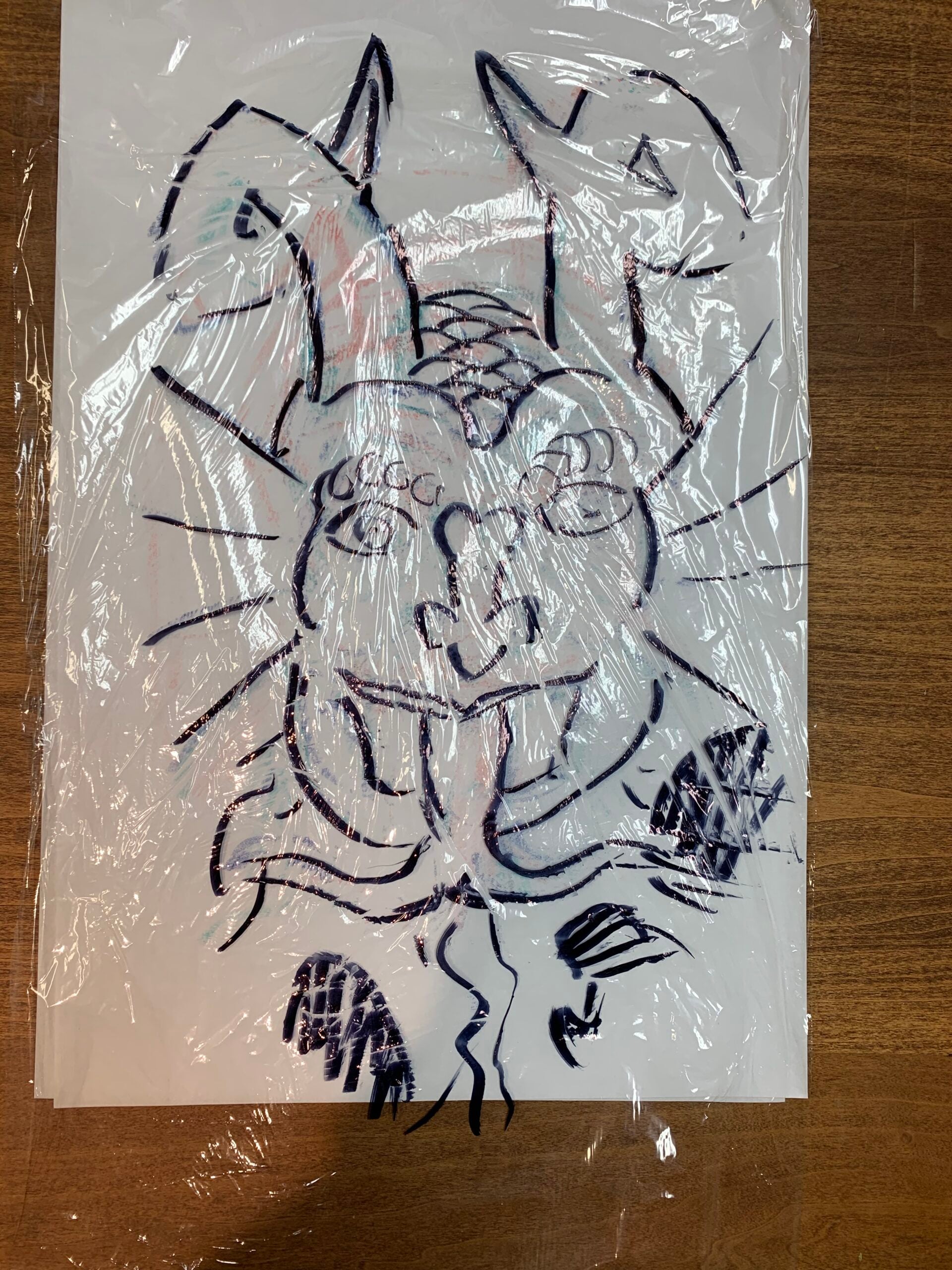
Tracing helps the artist draw a new tattoo.
What Happens in a Cover-Up Consultation?
At Ragtime, we never promise a solid cover-up without seeing the tattoo in person. Photos are helpful for early ideas, but you can’t make a real plan without seeing how the piece sits on your body, how the skin feels, or how much room we’ve got to work with. That first consultation is crucial. It's not just about measuring—it’s about asking the right questions: What do you hate about the current tattoo? What do you actually want to see when you look down at your arm or leg next year?
We'll go over what’s possible, what’s not, and whether laser should be part of the process. We’ll talk about how much larger the new tattoo will need to be, what styles give us the most flexibility, and how long the whole thing might take. It’s not about quick fixes. We want the new tattoo to look intentional. Like it was always meant to be there.
A good rule of thumb? Be cautious of any artist who says “yeah, no problem” without a detailed in-person assessment. A rushed “sure, I got you” can lead to your second regret tattoo—and that’s what we’re trying to avoid here.
Popular Cover-Up Styles and How They Work
Some styles naturally lend themselves to cover-up work. They use bold lines, deep contrast, and strategic design tricks to mask or incorporate what’s underneath.
Black and grey realism is a top choice—especially for dark or messy old tattoos. The heavy shadows and smooth gradations can hide old outlines while still looking soft and natural.
Traditional and neo-traditional styles are also strong options. Bold lines and solid color work together to override older designs. Think big roses, eagles, panthers—these shapes don’t shy away from contrast, which is exactly what you need when you’re fighting through older ink.
Floral cover-ups are another favorite, especially for names or script. Petals, vines, and leaves can wind through an old design, reshaping it organically without looking forced.
Blackouts and negative space designs go all in. They’re more of a commitment, but when done right, they can turn a chaotic mess into a clean, graphic aesthetic. We also sometimes use strategic tricks—like taking the darkest part of your old tattoo and building new shadows around it, or repurposing lines into something fresh instead of just hiding them.
The Process and Timeline
A good cover-up usually isn’t a one-session job. After your consultation, we’ll move into design and scheduling. If it’s a big or dense piece, the first session might just lay down the foundation—focusing on placement, linework, and beginning the darker areas. The second (or third) session is where things get refined and detailed.
Healing between sessions is important. The skin has to settle before we can layer more ink or deepen certain spots. The total timeline varies depending on your skin, the size of the tattoo, and how complex the design is, but generally, expect it to take a bit longer than a new piece on blank skin.
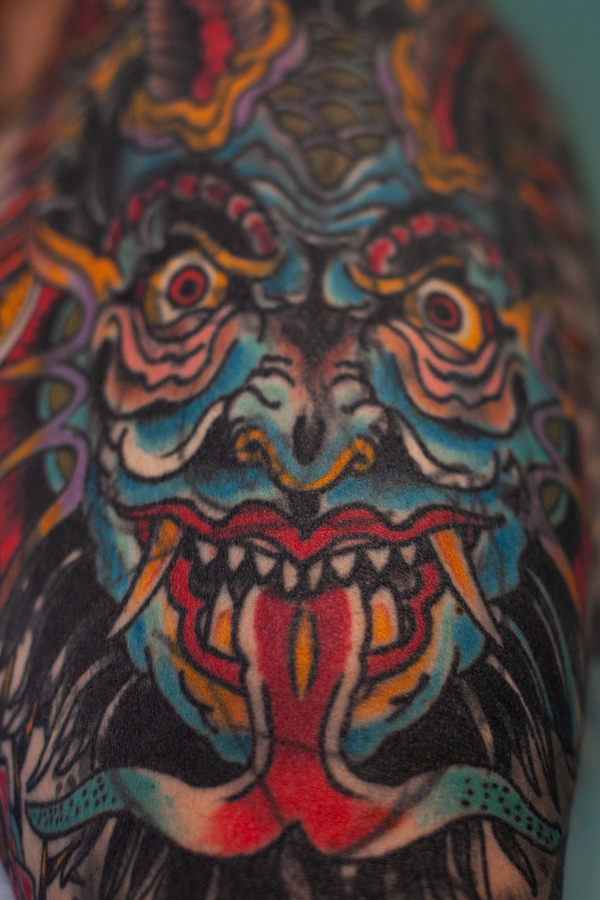
Blasting over the old tattoo with a new coverup.
Cost of a Cover-Up Tattoo
Cover-ups are more complicated than fresh tattoos, and the pricing reflects that. You’re not just paying for time—you’re paying for problem-solving, design work, and the challenge of working over existing ink.
Depending on the artist, pricing might be hourly or project-based. If laser lightening is recommended before we start, that’s an additional cost to consider—but for some people, it opens up way more creative options and is well worth it in the long run.
At Ragtime, we aim to be transparent with pricing. No surprises, no vague estimates that change halfway through. We’ll break down the plan and the price together so you can make an informed decision.
How to Avoid Needing Another Cover-Up
Getting a cover-up should come with one clear goal: never needing another one. That’s why we talk a lot about choosing the right artist and slowing down the decision-making process.
Avoid impulse tattoos. Avoid names (unless it’s your kids or your mom). Make sure the design fits the size and placement. Listen to your artist when they recommend going a little bigger or adjusting for flow. And follow aftercare instructions—it doesn't matter how good the tattoo is if it doesn’t heal well.
When you work with an artist who’s focused on long-term planning, you get a piece that holds up—not just physically, but emotionally. You won’t be looking at it in five years wondering how to get rid of it.
Closing Thoughts: Turn Regret Into Something You Love
There’s no shame in needing a cover-up. Most of us either have one or have done one. The good news is, you’re not stuck with ink that doesn’t reflect who you are anymore. A cover-up, when done right, can be a turning point—a way to reclaim your skin and your story.
At Ragtime, our approach to cover-ups is rooted in honesty, collaboration, and strong design. If you're in St. Louis and considering a tattoo rework, start with a consultation. We’ll take a real look, give you the truth about what’s possible, and map out a plan that makes you excited about your next tattoo—not anxious to hide it.
You don’t need to settle for something you’ve outgrown. You can move forward with art that actually feels like you.
Client Reference
Unfortunately, I have no idea who created the original artwork the client provided. Even though I redrew it to work for the cover-up, it didn't need a lot of changes from the original design. I have reverse image searched this a few times and still no luck. If anyone knows who did this painting, I would love to give them credit!
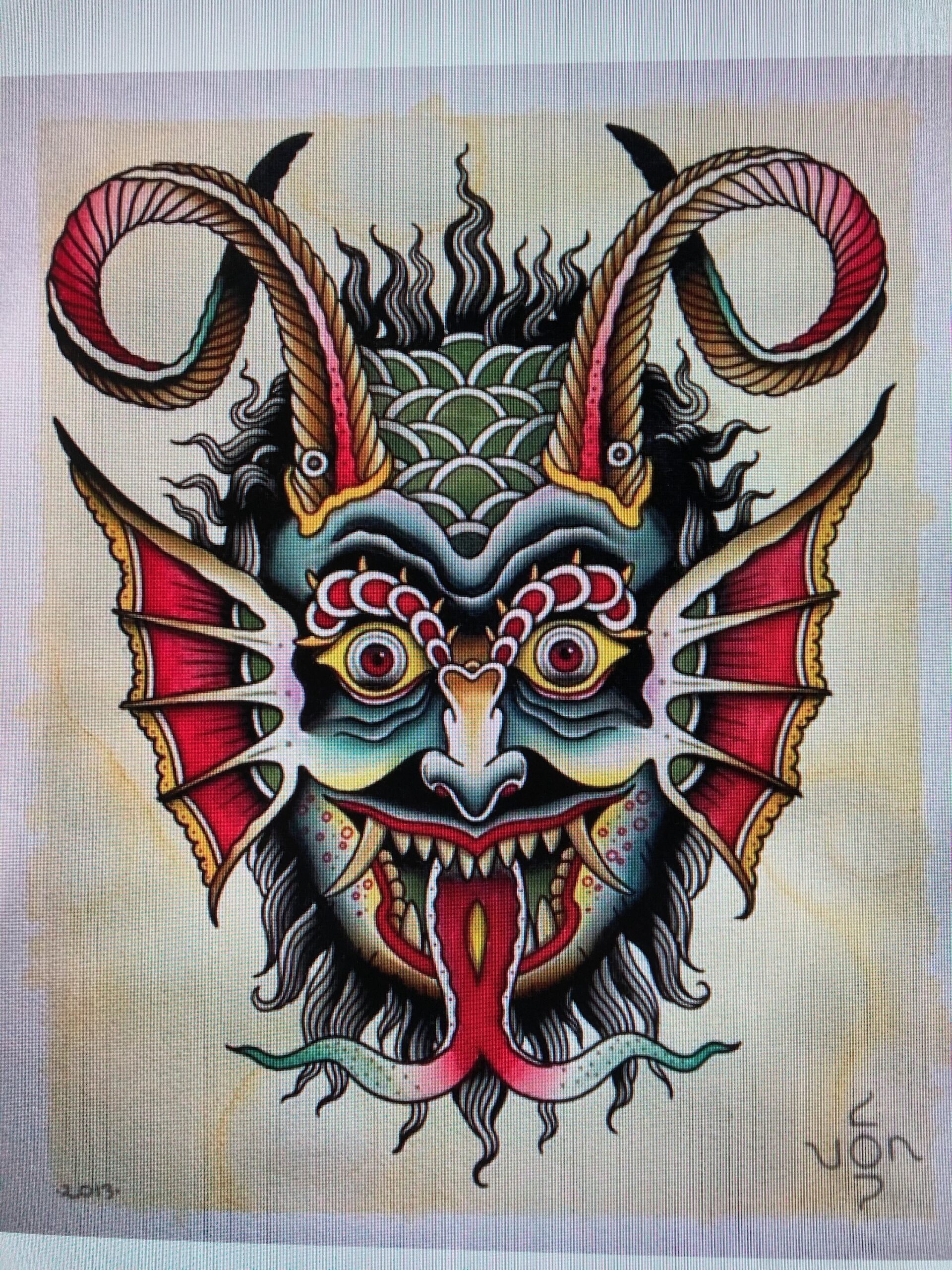
Client Reference for a Tattoo Coverup
Ready for your next tattoo?
Our goal is to reply as soon as possible. On weekends, we may follow up on the first business of the week.
Ragtime Tattoo Shop
Located at 3144 Morganford Rd. St. Louis, Missouri
Stay updated with our latest work and what’s happening in the shop.