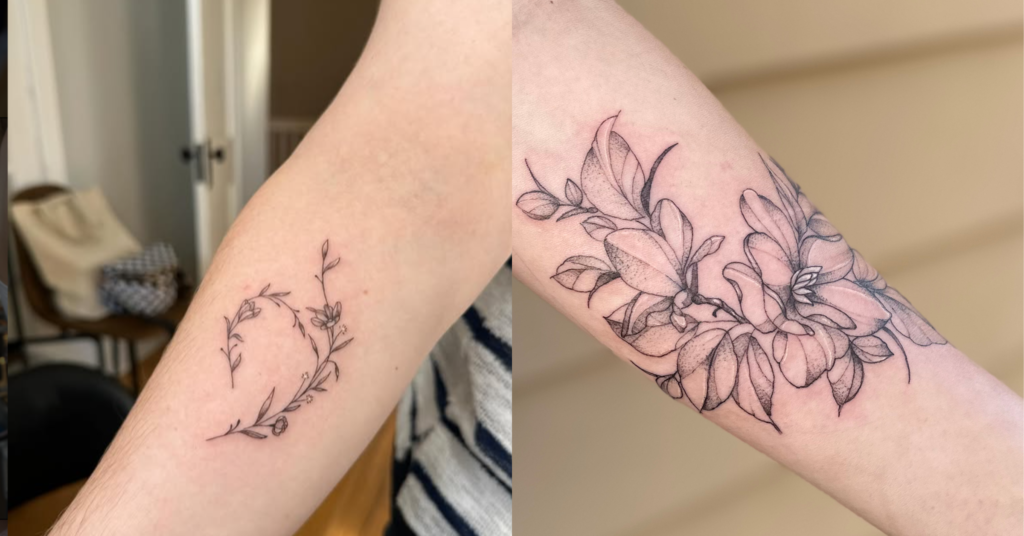
Fine Line Tattoos in St. Louis: What You Need to Know
Ragtime Tattoo Shop brings you Fineline Tattooing
The Style That’s Quietly Taken Over the Scene
Fine line tattooing has gone from niche to everywhere, fast. Especially here in St. Louis, where the appetite for delicate, clean design seems to grow every month. It’s showing up on wrists, collarbones, ribs, backs, subtle, minimal work that still says something. You’ve probably seen it without realizing it: thin, precise outlines of flowers, script that looks handwritten, tiny animals or symbols no bigger than a postage stamp. All pulled off with a level of care that demands a light touch and an experienced hand.
What Counts as a Fine Line Tattoo?
Technically speaking, fine line tattoos are built with smaller needles, often single needles or tight 3-round liners, and they rely on linework over shading or bold contrast. You won’t see big fills or heavy black. Instead, what makes fine line stand out is exactly that: the lines. Thin, detailed, often with a near-sketch-like softness to them.
Visually, these tattoos tend to lean subtle. Floral illustrations. Minimalist geometric pieces. Meaningful script. You’ll also see a lot of symbolic imagery, semicolons, hearts, stars, numerals, pieces that carry personal weight but don’t demand a ton of space.
There’s overlap with minimalist tattoos, and sometimes those words get used interchangeably, but they aren’t always the same thing. Minimalism is about simplicity in subject and composition. Fine line is about how it’s built. A minimalist tattoo can be done in bold traditional style, just as a fine line piece can be packed with ornate botanical detail. Fine line keeps the stroke weight low and the detail high, which takes experience, not just in application, but in knowing what will hold upover time.
Why Everyone’s Asking for Them
The appeal of fine-line tattoos extends beyond their appearance. It’s about how they feel to wear, especially in a world where not everyone wants, or can have, a huge, high-contrast tattoo on display.
Subtle Looks That Work in Any Room
There’s something about a tattoo you can choose to show or not. For folks working in corporate or conservative environments, fine line offers an entry point that doesn’t feel like a statement piece. It’s more personal, less performative. You can wear a long-sleeved shirt, and no one’s the wiser. Then roll it up and there’s a wildflower on your forearm.
A Comfortable First Step
For first-timers, fine line often feels less intimidating. The designs are usually smaller, the sessions quicker, and the visual weight softer. You’re not jumping straight into a five-hour session for a half sleeve, you’re easing in. Some people start with one small piece and build slowly, adding more over time, letting the story take shape in a way that feels organic. And yes, the pain level can be less intense, especially since the areas being tattooed are usually smaller and the needles finer.
Detail in a Small Footprint
This style allows artists to capture a surprising amount of detail in very little space. You can get a tiny butterfly that still looks like a specific species. A portrait of your dog that doesn’t turn into a smudge. The ability to keep it personal and intricate without scaling up to your whole thigh or bicep makes fine line a natural fit for those looking to tell a quiet story.
Modern, Elegant, and (Let’s Be Honest) Very Instagram-Friendly
We’d be lying if we said aesthetics weren’t part of it. These tattoos photograph well. They pair nicely with jewelry, with outfits, with selfies. They’re popular in part because they look good in the same spaces where we now share most of our lives. But that’s not a knock, it’s just reality. Clients want art that reflects who they are now, and fine line meets that moment.
What You Should Know Before Getting Fine Line Work
Here’s where we get real. Fine line looks great, but it’s not magic. It still behaves like a tattoo, which means your skin, your body, and time will all affect how it holds up.
They Age—Just Like Everything Else
Thin lines will soften over time. They might blur slightly or fade depending on your skin and where you placed them. This isn’t a flaw, it’s just reality. Tattoos aren’t static. They shift with you. Areas with more movement, stretch, or exposure, like fingers or ribs, will see more change than smoother, less mobile areas like the shoulder blade or forearm.
Good placement helps. A skilled artist will talk to you about what spots are better for longevity. And they’ll steer you away from anything too tiny or detailed if it’s going in a high-friction zone.
Not Every Artist Can, or Should, Do Fine Line
This is a style that rewards restraint and patience. The linework has to be confident, even when it’s delicate. That means clean, even lines, no blowouts, and consistent spacing. It’s not forgiving. A single shaky pass will stand out way more here than in a bold traditional tattoo.
When you’re picking an artist, look at their portfolio. And not just the fresh tattoos, healed photos matter even more. A fresh fine line piece might look perfect in the moment, but how it settles into the skin is what counts. Look for healed work that’s still legible and clean. That’s how you know the artist understands both the technique and the healing process.
Not Every Design Works Small
This is a hard truth, but it’s worth hearing early: not everything should be done tiny. Some designs just don’t scale well. If you try to cram too much detail into too little space, the result might look good for a month, then blur out by year two.
That doesn’t mean your idea’s off the table, it just might need a little breathing room. A good fine line artist will help adjust the scale, simplify the lines, or rework the layout so it stays readable and beautiful long-term.
You Might Need a Touch-Up Eventually
It’s normal. A decade down the road, you might want to sharpen a line or freshen up some faded ink. That’s not a failure, it’s part of the life cycle. If you love the tattoo, it’s worth maintaining. Just like you’d repaint a room or sharpen a kitchen knife. The goal isn’t perfection forever, it’s beauty that lasts well enough.
What’s Popular in St. Louis Right Now?
At Ragtime, we’ve seen all kinds of fine line requests over the years, but there are definitely some consistent favorites here in the city.
Floral pieces are always in demand, everything from wildflowers to detailed roses. They work beautifully in this style, especially when clients want something elegant and personal. Script pieces come next: names, dates, quotes with personal meaning. We’ve done everything from handwritten lyrics to coordinates from meaningful locations.
You’ll also see minimalist one-line drawings, small symbolic pieces like semicolons or birth signs, and delicate animals, birds, butterflies, even pet portraits. The goal in all of these is subtlety. Something the wearer connects with deeply, even if it’s only visible to them and the people they choose to show.
When clients come to Ragtime for custom work, we approach fine line design the same way we do any style: with a conversation. No rush. Just time spent figuring out what you actually want this to feel like. Because the best fine line pieces aren’t just pretty, they’re intentional.
The Process and the Pain Factor
If you’re worried about the pain, here’s the honest answer: most fine line tattoos are on the lower end of the pain scale. They tend to be smaller and faster to apply, and since there’s less packing or heavy shading, the sensation can feel more tolerable.
That said, location matters. A tiny piece on the ribs still stings more than a forearm tattoo. But overall, fine line work is a solid choice if you’re nervous about the discomfort. Most sessions fall somewhere between 30 minutes and two hours. Healing is similar to other tattoos, but because line clarity matters so much, you’ll want to follow aftercare instructions closely. No shortcuts.
How to Find the Right Artist for Fine Line Work in St. Louis
Fine line tattooing isn’t something every artist offers, and that’s a good thing. You want someone who chooses to work in this style because they understand what it demands.
Look for an artist who consistently shows clean, healed linework in their portfolio. Someone who’s not afraid to say when a design should be adjusted or when placement might compromise the piece down the road. That’s not being picky, it’s being professional.
At Ragtime, we’ve got artists who focus specifically on fine line work. It’s not a side project, it’s a practice. And whether you’re coming in for your first tattoo or your fifth, we treat it with the same attention and care.
A Final Word
Fine line tattoos offer a quiet kind of beauty. They’re detailed, subtle, and full of personality. If you’re looking for a tattoo that doesn’t shout, that works with your lifestyle and still feels personal and expressive, fine line might be exactly the right move.
Just be sure to approach it with the same thoughtfulness the style itself deserves. Find an artist who knows the craft, be realistic about aging and placement, and don’t rush the design process.
If you’re in St. Louis and thinking about fine line work, book a consultation at Ragtime Tattoo in South City. We’ll talk through your idea, look at placement, and make sure the piece we create is something that looks just as good in ten years as it does on day one.
Want to Meet a Ragtime Tattoo Artist? Let's Talk about your next Tattoo Design.
Ready for your next tattoo?
Our goal is to reply as soon as possible. On weekends, we may follow up on the first business of the week.
Ragtime Tattoo Shop
Located at 3144 Morganford Rd. St. Louis, Missouri
Stay updated with our latest work and what’s happening in the shop.
Hi I’m a tattoo artist from Italy I was wondering if you need any tattoo guest for working a couple of weeks
Hodel75@gmail.com
Send me an email! Let’s talk?